
Introduction
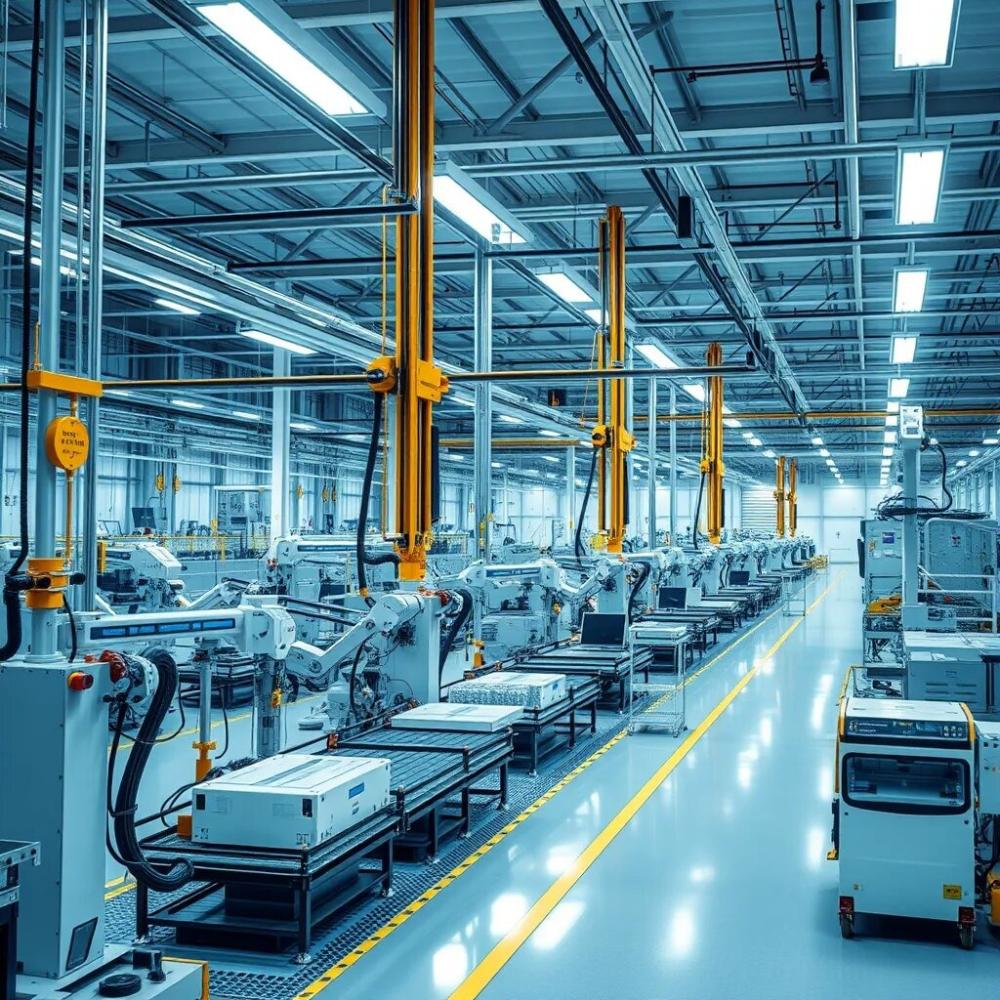
Factory automation is one of the most prominent trends in the modern industrial age, involving the use of advanced technology to facilitate and improve production processes. This includes the use of machines, robots, and intelligent control systems to enhance efficiency and reduce costs. In this article, we will explore the importance of factory automation and its impact on various aspects of industry.
1. Increased Production Efficiency
Factory automation significantly boosts production efficiency. By employing advanced machinery, operations can be executed faster and more accurately. For example, robots can perform welding and assembly tasks more quickly than humans, reducing production time.
2. Quality Improvement
Automation helps improve product quality. Automated systems can ensure precise standards in production, reducing waste and increasing customer satisfaction. Continuous monitoring allows for immediate detection of any defects in products.
3. Cost Reduction
Factory automation is an effective means of reducing costs. Although the initial investment in technology may be high, the long-term returns outweigh these costs. By decreasing the need for labor and increasing efficiency, companies can lower their operating expenses.
4. Enhanced Safety
Automation contributes to enhanced safety in the workplace. Some industrial processes can be hazardous for workers, so using machines and robots can reduce workers' exposure to risks. For instance, robots can handle heavy material loading, decreasing injuries.
5. Flexibility in Production
Automation allows factories to achieve greater flexibility in production processes. Automated systems can be easily adjusted to meet different production requirements, enabling companies to respond quickly to market changes and customer needs.
6. Improved Resource Management
Automation aids in better resource management by reducing waste and increasing resource efficiency. Advanced systems can track resources and use them more effectively, leading to significant cost savings.
7. Innovation and Product Development
Automation encourages innovation in product development. With advanced technology, engineers and designers can experiment with new ideas and develop innovative products that better meet market demands. Automation also allows for the improvement of existing processes, resulting in higher-quality products.
8. Sustainability Enhancement
Factory automation contributes to achieving sustainability goals. By improving energy and resource efficiency, environmental impacts of production processes can be reduced. Additionally, automation helps in minimizing waste and improving recycling efforts.
9. Market Competitiveness
Factory automation is a key factor in enhancing competitiveness. Companies that rely on automation can deliver high-quality products at competitive prices. This can provide them with a significant advantage in the market, helping to attract more customers.
10. Workforce Support
Although automation may lead to job reductions in some sectors, it also opens new job opportunities in technology, engineering, and maintenance fields. Thus, the workforce can evolve and acquire new skills that align with market demands.
11. Data Analysis and Process Improvement
Automation enables the collection and analysis of large amounts of data. This data can be used to enhance processes and make informed decisions. By analyzing performance, areas needing improvement can be identified, leading to the development of new strategies for increasing efficiency.
12. Balancing Supply and Demand
Automation contributes to improving the balance between supply and demand. With the ability to adjust production more rapidly, factories can better meet customer needs and reduce waste resulting from overproduction.
13. Accelerating Delivery Processes
Automation helps speed up delivery processes. By improving production efficiency, factories can reduce the time required to manufacture products, leading to faster delivery to customers. This enhances customer satisfaction and increases brand loyalty.
14. Enhancing Interdepartmental Collaboration
Automation fosters collaboration between different departments within the factory. Automated systems can communicate with each other, facilitating information exchange and improving coordination between production, sales, and distribution.
15. Adapting to Rapid Changes
In an era of rapid change, automation is crucial for adapting to market fluctuations. Factories that rely on automation can swiftly modify their operations in response to changes in demand or new trends.
16. Improving Inventory Management
Automation aids in improving inventory management. By accurately tracking inventory, waste can be reduced, and the necessary materials for production can be ensured in a timely manner. This helps optimize efficiency and reduce costs.
17. Enhancing Customer Experience
Automation enhances customer experience by improving product quality and increasing delivery speed. Companies that rely on automation can provide products that better meet customer expectations, leading to increased satisfaction and loyalty.
18. Supporting Technological Innovation
Factory automation supports technological innovation by promoting research and development. Companies that invest in automation are often more willing to adopt new technologies, helping them stay ahead of the competition.
19. Improving Strategic Planning
Automation helps improve strategic planning by providing accurate data on performance and production. Leaders can use this data to develop effective strategies and achieve company goals.
Conclusion
Factory automation is not just a technological trend; it is a strategic necessity in the modern industrial world. By enhancing efficiency, quality, and cost reduction, automation contributes to strengthening competitiveness and meeting the evolving needs of the market. As technology continues to advance, automation is expected to play an increasingly important role in the future of industry. Investing in automation is not just an investment in technology, but an investment in the future of business and the global economy.