
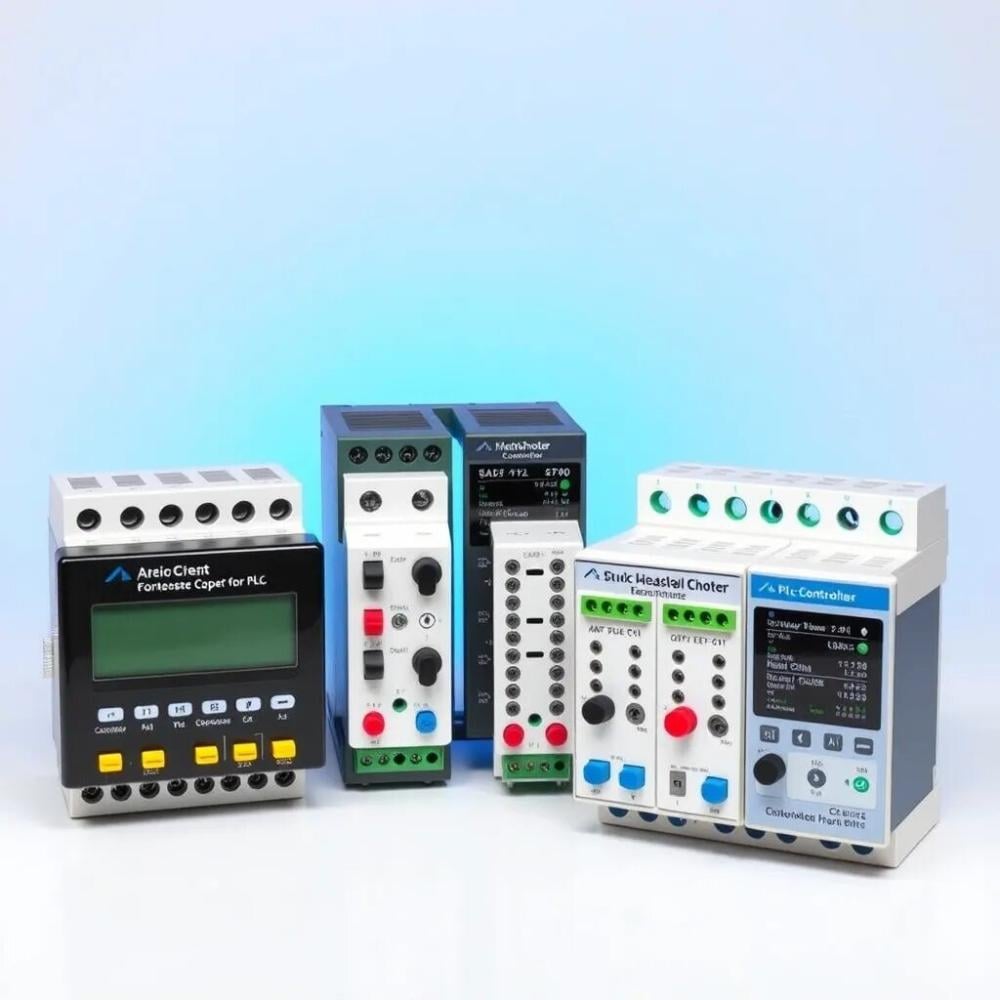
Programmable Logic Controllers (PLC)
Introduction
Programmable Logic Controllers (PLCs) play a crucial role in modern industrial automation. They are designed to control machinery and processes, offering flexibility, reliability, and efficiency. This article explores PLCs in detail, covering their definition, components, history, applications, advantages, challenges, and future trends.
What is a PLC?
A Programmable Logic Controller (PLC) is an industrial digital computer that uses programmable memory to store instructions for performing specific functions. These functions include:
- *Monitoring Inputs*: Reading signals from sensors and devices.
- *Executing Logic*: Processing the input signals according to predefined logic.
- *Controlling Outputs*: Sending commands to actuators and devices based on processed inputs.
Components of a PLC
PLCs consist of several key components:
1. Central Processing Unit (CPU)
The CPU is the brain of the PLC. It processes all the information and executes the control program. Key functions include:
- *Data Processing*: Handling input and output data.
- *Program Execution*: Running the logic programmed into the PLC.
2. Input/Output (I/O) Modules
I/O modules interface the PLC with the external environment. They are divided into two types:
- *Input Modules*: Receive signals from sensors (e.g., temperature, pressure).
- *Output Modules*: Send signals to actuators (e.g., motors, valves).
3. Power Supply
The power supply provides the necessary energy for the PLC and its components to operate. It converts the main voltage to a suitable level for the PLC.
4. Programming Software
Programming software is used to create and modify the control logic. Common programming languages include:
- *Ladder Logic*: A graphical programming language resembling electrical relay logic.
- *Structured Text*: A high-level programming language similar to Pascal.
History of PLCs
The concept of PLCs emerged in the late 1960s when the first PLC was developed by Modicon. It was designed to replace cumbersome relay-based control systems. Over the years, PLC technology has evolved significantly, incorporating advanced features such as:
- *Networking Capabilities*: Allowing multiple PLCs to communicate.
- *Enhanced Programming Languages*: Supporting more complex logic.
- *Connectivity with IoT*: Enabling integration with modern technologies.
Applications of PLCs
PLCs are used across various industries for numerous applications, including:
1. Manufacturing
In manufacturing, PLCs control assembly lines, robotic devices, and automated machinery, ensuring efficient production processes.
2. Process Control
PLCs monitor and control continuous processes in industries such as oil refining, chemical production, and water treatment.
3. Building Automation
In building automation, PLCs manage lighting, heating, ventilation, and air conditioning (HVAC) systems to optimize energy use.
4. Transportation
PLCs are used in traffic control systems and public transportation systems to enhance safety and efficiency.
Advantages of Using PLCs
PLCs offer several benefits, making them a preferred choice in industrial automation:
1. Flexibility
PLCs can be easily reprogrammed to accommodate changes in processes or production requirements.
2. Reliability
Designed for harsh environments, PLCs are robust and can operate under extreme conditions, ensuring minimal downtime.
3. Simplified Troubleshooting
PLCs often include diagnostic features that help identify and resolve issues quickly, reducing maintenance time.
4. Cost-Effectiveness
While the initial investment may be high, PLCs can lead to significant savings in operational costs and increased productivity over time.
Challenges of PLCs
Despite their advantages, PLCs also face several challenges:
1. Complexity of Programming
Programming PLCs can be complex and may require specialized knowledge, making training essential for operators and engineers.
2. Cybersecurity Risks
As PLCs become more connected, they are increasingly vulnerable to cyber threats, necessitating robust security measures.
3. Integration with New Technologies
Integrating PLCs with emerging technologies, such as IoT and cloud computing, can be challenging and may require significant upgrades.
Future of PLCs
The future of PLCs is promising, with several trends shaping their development:
1. Artificial Intelligence
AI can be integrated into PLCs to enhance decision-making capabilities and automate complex processes.
2. Improved Cybersecurity
As security becomes a priority, PLC manufacturers are developing advanced security features to protect against cyber threats.
3. Enhanced Connectivity
The trend towards Industry 4.0 will drive PLCs to become more interconnected, allowing for better data sharing and real-time monitoring.
Conclusion
Programmable Logic Controllers (PLCs) are essential for the automation of industrial processes. Their flexibility, reliability, and efficiency make them invaluable in various applications. As technology advances, PLCs will continue to evolve, integrating with modern systems and enhancing their role in the future of industrial automation.
By understanding PLCs and their capabilities, industries can harness their full potential, driving innovation and improving operational efficiency.